Almost every week, someone calls us standing next to a brand-new stove with a hole already cut in the ceiling, asking the same thing: single-wall or double-wall pipe? It sounds like a small decision. It is not. Pick wrong and you either give up a foot and a half of living space you did not need to, or you tuck a pipe too close to a wall and fail inspection. Here is how we talk people through it at the counter, in the same order.
Key Takeaways
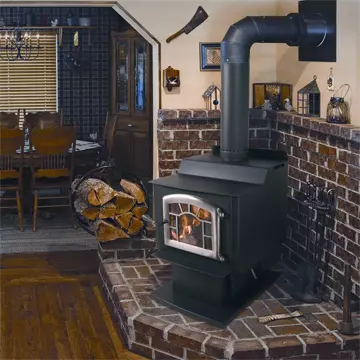
- Clearance is usually the decider. Single-wall needs 18 inches to anything combustible; double-wall needs only 6.
- Single-wall costs less and gives more heat to the room; double-wall drafts stronger, stays cleaner, and looks tidier.
- This is the connector pipe inside the room only. Above the ceiling, both switch to insulated Class A chimney pipe.
- Rule of thumb: tight space, go double-wall; open room where cost decides, go single-wall.
Grab a tape measure, check stove-to-wall, and you will know which side of this you are on before you read another line.
The 18-Inch Rule That Quietly Shrinks Your Room
If your stove sits anywhere near a wall, this is the factor that makes the decision for you. The code does not leave it open to interpretation:
Single-wall, per NFPA 211: "single-wall stove pipe (the connector pipe inside the room between the appliance and the Class A chimney) must maintain at least 18 inches of clearance from any combustible wall, ceiling, or framing."
Double-wall, per its listing: double-wall stove pipe is listed for reduced clearances; the double-wall pipe in our range is listed to 6 inches from combustible walls and 8 inches from ceilings, and the listing and installation instructions of the pipe you install set the figure.
Eighteen inches is a serious chunk of wall to surrender. In a corner hearth or a tight alcove it is usually the whole reason people pay more for double wall connector pipe. Flip it around, though: if your stove stands out in an open room, that 18-inch zone around single-wall pipe may cost you nothing, and you get to keep the cash.
Planning a corner hearth? Our guide to corner wood stove installation takes the stove's corner clearances, the connector pipe, the floor protection and the way out for the chimney in order.
What You're Actually Paying For
Single-wall is the value pick, and on an open install there is nothing second-rate about it. Double-wall costs more because you are buying that second layer and the performance it brings. Here is where 6-inch pipe lands in our range today:
| 6-inch connector pipe | Typical price | What the money buys |
|---|---|---|
| Single-wall | $45 to $139 | Lowest cost, more radiant heat in the room |
| Double-wall | from about $80 | 6-inch clearance, stronger draft, cleaner finish |
Heat in the Room, or Heat Up the Chimney?
This is the trade most guides skip, and it is the interesting one. Single-wall pours heat off the pipe into your living space, a genuine bonus if the stove is your main heat source and the pipe run is long. Double-wall deliberately does the opposite and keeps that heat inside. Hotter gas climbs harder, so you get a stronger, steadier draft and far less creosote gluing itself to the pipe walls. If you have ever battled a smoky, sulking startup on a cold morning, a hotter pipe is usually half the cure.
Your Setup, Your Pick
| Reach for single-wall when... | Reach for double-wall when... |
|---|---|
| The stove is in the open with 18 inches to spare | The stove sits close to a wall or in a corner |
| You want maximum radiant heat off the pipe | You want a stronger draft and less creosote |
| Price is the deciding factor | You care about the clean, finished look |
Either way, the run above the ceiling is identical: insulated Class A pipe takes it the rest of the way. You can line up both connector options on the wood stove pipes page and match the diameter to your stove.
Can You Connect Single-Wall and Double-Wall Stove Pipe Together?
No. Do not mix single wall and double wall stove pipe in one connector run: the installation instructions supplied with the double wall pipe say so. Use one type from the stove to the Class A chimney, and use only the parts made for this pipe at every joint, as its installation instructions require.
The more common transition is not single to double at all. It is connector pipe to Class A, and it happens at the ceiling support box or the wall thimble. Everything below it is connector pipe; everything through and above the building is Class A.
What Size Stove Pipe Do I Need?
Size it from the stove's flue collar, not from the room. Most US wood stoves use a 6 inch connector, and this comparison uses the live 6 inch single-wall and double-wall products. Always match the connector to the appliance outlet and listing. Never reduce below the collar diameter: an undersized flue chokes the draft and can push smoke back into the room. If you are venting a fireplace rather than a stove, the flue has to carry the full opening, which usually means the larger end of the range.
What Are the Installation Requirements for Single-Wall Stove Pipe?
Four things, matching the double-wall list below with one number changed:
- Keep 18 inches to any combustible wall, ceiling or framing, on every section of the run.
- Support the run so its weight is not hanging off the stove collar.
- Point the crimped end down, toward the stove, so any condensate runs back inside the pipe.
- Stop at the ceiling or wall: single-wall pipe may never pass through the building fabric, so the run transitions to Class A insulated chimney pipe at the ceiling support box or the wall thimble.
If you want your layout checked before you order, our free flue-design service will spec the complete, code-compliant run for your stove: send us your setup or call 888-834-0880 and a real specialist will size it with you.
What Are the Installation Requirements for Double-Wall Stove Pipe?
Four things, and they are all straightforward:
- Keep 6 inches to a combustible wall and 8 inches to a ceiling.
- Support the run so its weight is not hanging off the stove collar.
- Point the crimped end down, toward the stove, on every section.
- Stop at the ceiling or wall: transition to Class A insulated chimney pipe at the ceiling support box or the wall thimble, because connector pipe of any kind may never pass through the building fabric.
Straight Answers to What People Ask Us
Can I Run Single-Wall Low and Switch to Double-Wall Near the Wall?
No. The installation instructions supplied with the double wall pipe say not to mix it with single wall stove pipe, so in a tight room run double-wall the whole way from the stove to the Class A chimney.
Can I Upgrade to Double-Wall Later?
Yes, and it is a swap rather than a rebuild. The connector run is the accessible part of the system: measure the run, match the diameter to your stove collar, and exchange the sections, using the correct adapter at the stove end. The Class A chimney above the ceiling stays exactly as it is. People usually make this switch when furniture moves closer to the stove or when a long single-wall run keeps growing creosote, so starting with single-wall does not lock you in.
Can Drywall Touch Double-Wall Stove Pipe?
No. Double-wall stove pipe still needs its listed clearance; it is not a zero-clearance product. This guide uses a 6-inch clearance for double-wall connector pipe, so keep that space to the finished wall and follow the stove and connector manufacturer instructions if either calls for more.
Does Double-Wall Really Draft Better?
In most installs, yes. By holding the heat in, double-wall keeps a stronger, more reliable draft and lets less creosote condense inside the pipe. On a cold exterior chimney that difference is the line between a clean burn and a stubborn one.
Is Single-Wall Pipe Less Safe?
No. Single-wall is perfectly safe when you give it the full 18 inches the code asks for. It only becomes a problem when someone shoves it close to a wall to save room, which is the exact job double-wall was invented for.
Does Double-Wall Stove Pipe Get Hot on the Outside?
Yes, but far less than single-wall, and that is the point of it. The inner wall carries the flue heat while the air gap slows the transfer, so the outer skin runs cool enough for the 6 inch wall clearance to be safe. It is still hot enough to burn skin during a burn, so it is not a surface to lean on or hang anything from.
How Does the Air Gap Affect Performance?
It keeps flue gas warmer on the way up, and warmer gas drafts better. In practice that means a stove that establishes its draft sooner from cold and is less prone to a smoky start on a mild day. It also means less of the flue heat radiates into the room from the connector pipe itself, which is the trade-off: you gain draft and clearance, and you give up a little radiant heat. Note that black double-wall connector pipe works by an air gap rather than by insulation. Insulation is what makes Class A chimney pipe different, and ours uses a 1.18 inch ceramic-fiber core.
Lifespan and Maintenance
Both types last a long time in normal use, and what shortens either is the same thing: creosote from burning unseasoned wood, and moisture. Single-wall is the easier of the two to inspect and sweep, because there is only one wall between you and the deposit. Double-wall needs the same annual sweep with a poly brush sized to the flue, and the connections checked while the brush is out. Never use a wire brush on either, and never leave a season's creosote in place because the pipe looks fine from outside.
The Bottom Line
It comes down to one measurement and one priority. Measure stove to nearest combustible surface. Clear 18 inches and want lower-cost pipe that heats the room? Single-wall is a smart, honest choice. Tight on space, or want the stronger draft and the cleaner look? Double-wall earns every dollar. Once you know your number, browse the stove pipe range and we will get the right pipe on its way. Still on the fence about the fit? Call us on 888-834-0880 for free flue-design help and we will size it with you in about five minutes.
Source: NFPA 211, Standard for Chimneys, Fireplaces, Vents, and Solid Fuel-Burning Appliances.
Need More Information?
Hopefully, you just got all the answers you need, but maybe you still have a question. If you want to know about this or any other topic relating to domestic burners and flue pipes, then please check out our FAQ page.
Here are our installation guides.
If you have a more specific problem, or you need your purchase sorted out quickly, then take advantage of our years of experience and head to our contact page.