Heating a tiny house with a small wood stove is one of the most satisfying setups there is, right up until the chimney is done wrong and the cabin fills with smoke or a clearance gets missed. The good news: the chimney for a tiny house is simpler than for a full home. Shorter runs, one floor, and a small stove. Get four things right (diameter, clearances, height, and support) and you have a safe, warm space.
What makes a tiny house chimney different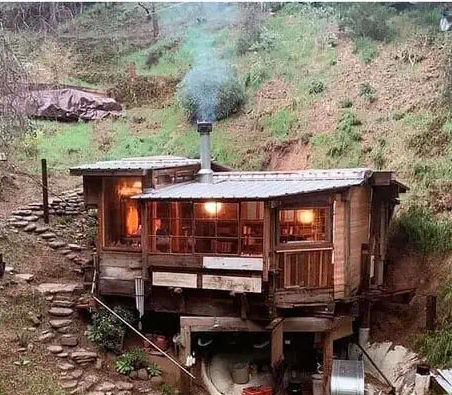
Three things set a tiny house apart. Space is tight, so the pipe usually goes straight up and out the roof rather than out a wall. Weight and roof strength matter, so an insulated metal chimney (light and slim) beats anything masonry. And if the house sits on a trailer and travels, every joint needs to be locked and the above-roof section braced so vibration cannot loosen it. A slim, listed metal system solves all three.
Pick the right diameter
Match the chimney to the stove, not to the room. Small tiny-house stoves commonly have a 5 or 6 inch flue collar. Our Class A insulated pipe comes in 6 and 8 inch, and our free flue-design service matches it to your stove, including the right adapter for a 5 inch collar, so you get one correctly sized, matched run. Do not neck a 6 inch stove down to a smaller pipe to save space, it kills the draft and pushes smoke back into the room.
Get the clearances right
Two clearances do the heavy lifting. Inside the room, the black connector pipe from the stove needs room to breathe. Per NFPA 211, single-wall stove pipe (the connector pipe inside the room between the appliance and the Class A chimney) must maintain at least 18 inches of clearance from any combustible wall, ceiling, or framing. Where the chimney passes through the ceiling and roof, you switch to Class A insulated pipe, which sits much closer to wood. Class A insulated chimney pipe, when UL 103 HT-listed for wood-burning, maintains a minimum of 2 inches clearance to combustibles per the standard listing. Always verify the exact clearance specified by the manufacturer's UL listing for the specific product. In a tiny house those inches are precious, which is exactly why you use insulated Class A through the roof rather than trying to keep single-wall pipe 18 inches off everything.
Height above the roof
A short chimney on a low tiny-house roof is the most common draft mistake. The chimney has to clear the roof by a set amount and rise above nearby high points so it drafts cleanly and safely. The exact figures are on our chimney height guide, worth a two-minute read before you cut the roof, because getting it wrong means a smoky stove and a failed inspection.
Support and the through-roof path
For a straight-up run, a ceiling support box carries the Class A chimney, flashing seals the roof penetration, and a storm collar and cap finish the top. On a stationary tiny house that is all you need. On a mobile one, add locking bands at every joint and brace the section above the roof. Our through-the-roof chimney kits bundle the support box, insulated pipe, flashing, storm collar, and cap so nothing is missed.
Cost and doing it yourself
A tiny house chimney is refreshingly affordable next to any masonry option. Class A insulated pipe starts around $73 for 6 inch per section, and a complete through-roof kit is configured from the parts your run actually needs rather than a fixed package price. Because the run is short and simple, a capable owner can install a standard kit in a weekend, which is where most of the labor cost goes. To keep the coverage intact, the warranty requires only that the system is installed according to the supplied instructions, whether you fit it yourself or have a contractor do it.
Tiny house chimney checklist
| Item | What to use |
|---|---|
| Connector (inside the room) | Single or double wall stove pipe, 18 inch clearance if single wall |
| Through ceiling and roof | Class A insulated pipe (UL 103 HT), 2 inch clearance |
| Diameter | Match the stove collar; our Class A comes in 6 and 8 inch |
| Roof penetration | Ceiling support box, flashing, storm collar, cap |
| If on a trailer | Locking bands at joints, brace the above-roof section |
Not sure what your cabin needs?
Tell us your stove and roof and we will spec the whole thing. Our free flue-design service lays out a complete, code-compliant chimney for your exact tiny house at no charge. You can also call 888-834-0880 or browse Class A insulated chimney pipe, or start from the complete through-the-roof chimney kits.
Need More Information?
Check our FAQ, browse the installation guides, or visit our advice section for more help with your chimney project.