Why Is Installing a Stove in a Trailer Different?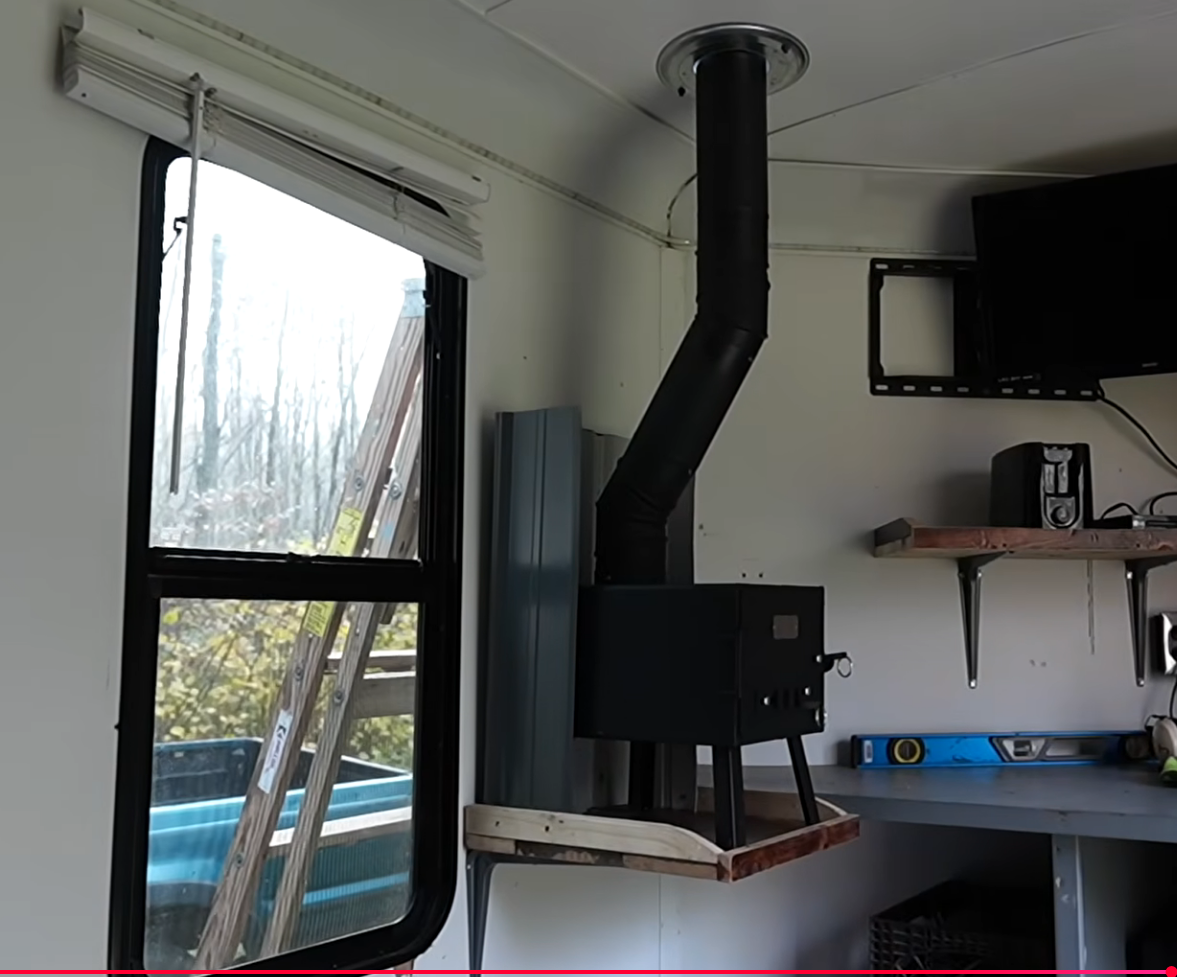
Trailers move. That means your chimney system has to handle road vibration, wind loads at speed, and shifting weight. A standard residential chimney installation will not survive this. You need hardware designed for mobile applications, shorter chimney runs to reduce leverage, and extra bracing at every penetration point.
Trailers also have thinner walls and floors than houses. Most trailer walls are just a thin layer of aluminum or fiberglass over wood framing, which means clearance-to-combustibles rules are even more important. There is very little room for error.
Trailer vs. House: Stove Installation Differences
| Factor | House Installation | Trailer Installation |
|---|---|---|
| Stove size | Any size | Small/mini (under 50,000 BTU) |
| Stove pipe type | Single or double wall | Double wall required |
| Floor protection | Hearth pad | Hearth pad + structural reinforcement |
| Chimney bracing | Standard roof support | Extra bracing for vibration and wind |
| Weight placement | Not a concern | Must be near axle line |
| Insurance | Standard homeowner | May void RV/trailer policy - check first |
What You Will Need
- A small wood stove rated for the square footage of your trailer (typically under 50,000 BTU)
- Double wall stove pipe (required in mobile/manufactured units per HUD standards)
- Class A insulated chimney pipe (UL 103 HT listed, for the roof or wall penetration)
- Ceiling support box or wall thimble
- Roof flashing and storm collar
- Rain cap
- Non-combustible hearth pad (extends at least 18 inches in front of the stove door)
- Wall heat shield (non-combustible, with a 1-inch air gap behind it)
- Sheet metal or fireproof material for floor reinforcement under the hearth pad
- High-temperature silicone sealant
- Screws, brackets, and support straps rated for vibration
Before You Start
Check your insurance policy. Many RV and trailer insurance policies exclude wood-burning appliances entirely. Others require a certified installation or inspection. Call your insurer before you buy any materials.
Check local regulations. Some states and campground operators do not allow wood stoves in trailers. If you park in an RV park or on managed land, confirm that wood-burning appliances are permitted.
Weigh your stove and chimney components. A cast iron stove with chimney pipe, hearth pad, and firewood can add 200 to 400 pounds to your trailer. Make sure your trailer's gross vehicle weight rating (GVWR) can handle the extra load, and plan to place the stove near the axle line.
Step-by-Step Installation
Step 1: Choose the Location
Place the stove as close to the trailer's axle line as possible to keep weight balanced. Pick a spot with enough clearance to combustible walls on all sides. Double wall stove pipe requires 6 inches to combustible walls and 8 inches to combustible ceilings. If that is not possible, install a non-combustible heat shield with a 1-inch air gap, which can reduce the required clearance (check your stove manufacturer's specs for exact numbers).
Step 2: Protect the Floor
Trailer floors are typically thin plywood or composite over a lightweight frame. You need to reinforce the floor under the stove location with sheet metal or a fireproof backer, then place a non-combustible hearth pad on top. The hearth pad must extend at least 18 inches in front of the stove door and 8 inches on each side.
Step 3: Install the Heat Shield
Mount a non-combustible heat shield on the wall behind the stove. Use spacers to create a 1-inch air gap between the shield and the wall. This gap allows air to circulate and prevents heat from transferring directly into the combustible wall material.
Step 4: Cut the Roof or Wall Exit
For a roof exit, cut a hole sized to your ceiling support box. Keep it as close to directly above the stove as possible to minimize offsets. Seal the edges of the cut and install the ceiling support box per the manufacturer's instructions. For wall exits, install a wall thimble rated for Class A chimney pipe. For more details on roof exits, see our chimney roof exit guide.
Step 5: Connect the Stove Pipe
Attach double wall stove pipe from the stove's flue collar up to the ceiling support box. Use a stove adapter at the bottom and a telescoping section if needed to get the right length. Double wall pipe is required in trailers and manufactured homes per HUD standards - single wall is not permitted.
Step 6: Install the Class A Chimney Pipe
From the ceiling support box upward through the roof, switch to Class A insulated chimney pipe. This is the only pipe type rated to pass through combustible roofing materials. Install the roof flashing, storm collar, and rain cap. The chimney must extend at least 3 feet above the roof penetration and 2 feet higher than anything within 10 feet (the 3-2-10 rule). For more on building code requirements, see our building codes guide. Our guide explains which chimney pipe you need at each point in the run.
Step 7: Brace Everything
This is where a trailer install differs most from a house. Use support straps and brackets at the ceiling support box and along the chimney run to prevent movement during travel. Every joint, every connection, every bracket must be secured against vibration. Check your chimney manufacturer's mobile installation guidelines for specific bracing requirements.
Step 8: Test Before You Travel
Light a small test fire and check every joint for smoke leaks. Verify that the stove sits stable and does not shift when you push on it. After the stove cools, inspect all connections. Then take a short test drive and re-inspect everything. Road vibration can loosen joints that seemed tight in the driveway.
Safety Rules for Wood Stoves in Trailers
- Install a carbon monoxide detector and a smoke alarm. In a small enclosed trailer, CO buildup can happen fast.
- Never burn your stove while driving. Extinguish the fire completely, close all vents, and let the stove cool before you move the trailer.
- Keep a fire extinguisher within reach of the stove at all times.
- Use only dry, seasoned firewood. Green or wet wood produces more creosote, and a chimney fire in a trailer is far more dangerous than in a house.
- Inspect the chimney before every heating season and after every long road trip. Look for loose joints, cracked sealant, and damaged flashing.
- Never store firewood directly against the stove or chimney. Keep it at least 36 inches away.
Need Help Planning Your Trailer Stove Installation?
Every trailer is different, and getting the chimney layout right the first time saves money and keeps you safe. Use our free chimney design service to get a custom parts list and installation plan for your specific trailer. Send us your trailer dimensions, stove model, and a photo of where you want to place it, and we will send back a recommendation within 24 hours. You can also call us at 888-834-0880 (9 AM - 9 PM, 7 days a week) or browse our complete chimney kits.
If you have a manufactured home or mobile home (not a travel trailer), see our dedicated guide on installing a chimney in a mobile home, which covers HUD-specific requirements.
Frequently Asked Questions
Is it legal to put a wood stove in a travel trailer?
There is no federal law that prohibits wood stoves in travel trailers. However, some states, counties, and RV parks have their own restrictions. Check your local fire code and campground rules before installing. Your RV insurance policy may also exclude wood-burning appliances or require a professional inspection.
What type of stove pipe do I need in a trailer?
You need double wall (close-clearance) stove pipe inside the trailer and Class A insulated chimney pipe for the roof or wall penetration. Single wall stove pipe is not allowed in trailers or manufactured homes per HUD standards. Double wall pipe provides 6 inches of clearance to combustible walls and 8 inches to ceilings.
Can I use a wood stove while the trailer is moving?
No. You should never burn a wood stove while driving or towing. Extinguish the fire completely, close all vents, remove any loose ash, and let the stove cool before you move. Road vibration can loosen chimney joints, and a shift in weight from an active fire is a safety risk.
How much weight does a wood stove add to a trailer?
A small wood stove with chimney pipe, hearth pad, heat shield, and a starter load of firewood typically adds 200 to 400 pounds. Check your trailer's gross vehicle weight rating (GVWR) to make sure you have enough capacity, and place the stove near the axle line to keep the trailer balanced.
Need More Information?
Hopefully, you just got all the answers you need, but maybe you still have a question. If you want to know about this or any other topic relating to domestic burners and flue pipes, then please check out our FAQ page.
Here are our installation guides.
If you have a more specific problem, or you need your purchase sorted out quickly, then take advantage of our years of experience and head to our contact page.
For an off-grid or towable build, our tiny house chimney setup guide walks through the sizing and support.