Quick answer: chimney pipe replacement is priced by the parts your system needs, not one flat figure. Class A insulated pipe is priced by diameter and by section length: in 6 inch diameter a 36 inch long section is $187 and 48 inches long is $254, and in 8 inch diameter an 18 inch long section is $163; single-wall connector pipe starts near $45 for a 6 inch diameter 12 inch long section. Roof flashing with a storm collar runs $240 to $277. Professional labor is extra, so get a quote from a licensed installer.
| Part | Starting price (USD) |
|---|---|
| Class A insulated pipe, 6 inch diameter x 36 inches long | $187 |
| Class A insulated pipe, 6 inch diameter x 48 inches long | $254 |
| Class A insulated pipe, 8 inch diameter x 18 inches long | $163 |
| Single-wall connector pipe, 6 inch diameter x 12 inches long | $45 |
| Roof flashing (by pitch) with storm collar | $240 to $277 |
Prices are per part and vary with length and diameter. Shop matched sections on our Class A chimney pipe page, or call our US team on 888-834-0880 for a firm parts figure.
This page covers replacing metal pipe that is already there. If you are relining an existing masonry chimney, see chimney liner cost. If you are costing a complete new system, see chimney installation cost.
What Affects the Cost to Replace a Chimney Pipe?
Your total depends on which parts your system actually needs, not one flat number. Here's what moves the price most:
Type of Chimney Pipe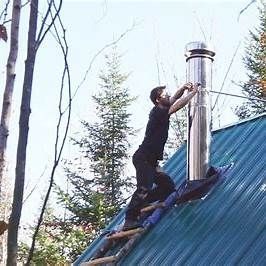
The type of pipe you need has the biggest impact on your bill. There are three main types used in residential wood stove and fireplace installations:
- Stove pipe (single-wall or double-wall): This is the visible pipe inside your room that connects your stove to the ceiling or wall. Single-wall stove pipe costs roughly $4 to $8 per linear foot. Double-wall stove pipe runs $15 to $30 per linear foot. Neither type is rated to pass through walls, ceilings, or roofs. Learn more about choosing the right connector pipe in our guide to the best stove pipe for a wood-burning stove.
- Class A insulated chimney pipe: This is the UL 103 HT-rated pipe that runs through your attic, walls, and roof. It's built to withstand temperatures up to 2,100 degrees F and requires only 2 inches of clearance to combustibles. Expect to pay $50 to $80 per linear foot for quality double-wall insulated Class A pipe. A complete Class A insulated chimney pipe system for a single-story home typically runs $800 to $2,000 in parts.
- Chimney liner (flexible stainless steel): Used to reline an existing masonry chimney. A DIY chimney liner kit costs $300 to $800 for materials, depending on length and diameter. Professional installation brings the total to $1,500 to $4,000.
Height and Length of Your Chimney
Taller chimneys mean more pipe and more labor. A single-story ranch home might need 15 feet of Class A pipe, while a two-story colonial could require 30 feet or more. That difference alone can double your material costs. Check out our multi-story chimney installation guide if you're working with a taller home.
Roof Pitch and Accessibility
Steep roofs are harder to work on. If a contractor needs scaffolding, a boom lift, or extra safety equipment, expect labor costs to jump by $500 to $2,000. You can learn how to measure your roof pitch to get a better sense of what your job involves.
DIY vs. Professional Installation
This is where the savings get real. A professional chimney pipe installation typically runs $400 to $1,500 in labor on top of materials. That's money you can save if you're comfortable working on a roof and following manufacturer instructions. All of our complete chimney kits come with detailed instructions, and our team offers free expert advice before, during, and after your install.
Chimney Pipe Replacement Cost Breakdown by Project Type
Here's a practical breakdown of what different chimney pipe replacement jobs cost in 2026, based on current market pricing:
Replacing Stove Pipe Only (Room-Side Connector Pipe)
If you only need to swap out the black stove pipe that connects your wood stove to the ceiling support box, you're looking at the cheapest option. A full set of single-wall stove pipe sections for a typical installation runs $50 to $150. Double-wall stove pipe for the same setup costs $150 to $400. This is a straightforward DIY job for most homeowners. See our single-wall stove pipe installation guide for step-by-step instructions.
Replacing Class A Chimney Pipe (Through Roof)
A full Class A chimney pipe replacement through the roof of a single-story home typically costs $1,000 to $2,500 in materials for a DIY install. That includes the ceiling support box, pipe sections, roof flashing, storm collar, and chimney cap. For a two-story home, add another $500 to $1,000 in extra pipe sections and firestop radiation shields.
If you hire a contractor, expect to pay $2,000 to $5,000 total for a standard residential replacement, including materials and labor.
Relining an Existing Masonry Chimney
If you have a brick chimney and need to replace a deteriorated clay tile liner with a stainless steel flex liner, costs vary by chimney height and liner diameter. A 6-inch chimney liner kit for a 25-foot chimney runs roughly $400 to $700 as a DIY job. Professional installation typically brings the total to $2,000 to $4,000, sometimes more for difficult access or damaged chimneys that need additional prep work.
Full Chimney System Replacement (From Stove to Cap)
If everything needs to go - stove pipe, Class A chimney pipe, support components, and cap - a complete DIY replacement for a single-story home runs $1,200 to $3,000 in materials. For a two-story home, budget $2,000 to $4,500. Hiring a pro for the full job can cost $3,000 to $7,000 depending on complexity.
How to Save Money on Chimney Pipe Replacement
The single biggest way to cut costs is doing the work yourself. A DIY install saves $400 to $2,000 in labor, and most homeowners with basic tool skills can handle it safely when they follow the right instructions.
Here are some practical tips to keep costs down:
- Buy a complete kit instead of individual parts. Kits bundle everything you need at a lower price than buying each component separately. Our chimney liner kits and complete chimney kits are designed for exactly this.
- Measure carefully before ordering. Returning pipe because you ordered the wrong size or length wastes time and shipping costs. Use our free chimney design service to get a custom quote and parts list within 24 hours.
- Don't mix brands. Class A chimney pipe from different manufacturers won't fit together safely. Stick with one system to avoid buying parts you can't use.
- Check if you need a full replacement or just a partial swap. Sometimes only the stove pipe or a single section of Class A pipe is damaged. Replacing just the worn-out section saves money compared to tearing out the whole system.
Signs Your Chimney Pipe Needs Replacing
How do you know it's time? Watch for these warning signs:
- Rust, corrosion, or discoloration on the pipe surface, especially near joints and seams
- Visible cracks, holes, or warping in any section of the pipe
- Smoke leaking into the room from joints or connections that used to be sealed
- Persistent creosote smell even when the stove is not in use
- Loose or separated pipe sections that no longer lock together tightly
- Failed inspection by a certified chimney sweep or local building inspector
If your pipe is more than 20 to 25 years old, it's worth getting an inspection even if nothing looks obviously wrong. Internal damage isn't always visible from the outside.
What About Masonry Chimney Repairs vs. Pipe Replacement?
If you have a traditional brick chimney, the cost picture changes. Masonry chimney repairs - like tuckpointing, crown replacement, or rebuilding the stack above the roofline - can run $1,000 to $15,000 depending on the scope. A full masonry chimney tear-down and rebuild averages around $9,300 nationally.
For many homeowners, installing a stainless steel chimney liner inside an existing masonry chimney is far cheaper than rebuilding the masonry itself. A new liner restores safe venting, improves draft, and extends the life of your chimney for a fraction of the cost. Read more about why a stainless steel chimney liner makes sense.
Can You Replace a Chimney Pipe Yourself?
Yes, and thousands of homeowners do it every year. Class A chimney pipe systems are designed with twist-lock or snap-lock connections that don't require special tools. Stove pipe is even simpler to swap out.
That said, there are a few things to keep in mind:
- Always follow NFPA 211 standards and your local building codes for clearances, height requirements, and materials.
- Never substitute stove pipe for Class A chimney pipe. Stove pipe is not rated to pass through walls, ceilings, or roofs. The transition from stove pipe to Class A must go through a tested ceiling support box or wall thimble.
- Make sure your new pipe matches the flue collar diameter on your stove. Most wood stoves use a 6-inch or 8-inch outlet.
- Follow the 3-2-10 rule for chimney height above the roof: the top of the chimney must be at least 3 feet above the point where it exits the roof, and at least 2 feet higher than anything within 10 feet horizontally.
Not sure what you need? Our free chimney design service gives you a custom parts list and installation plan within 24 hours. And our tech support team is available 7 days a week at 888-834-0880 if you get stuck during the install.
Chimney Pipe Replacement Cost: The Bottom Line
Here's a quick summary of what you can expect to spend in 2026:
- Stove pipe only (DIY): $50 to $400
- Chimney liner kit (DIY): $300 to $800
- Chimney liner (professional install): $1,500 to $4,000
- Class A chimney system, single-story (DIY): $1,000 to $2,500
- Class A chimney system, two-story (DIY): $2,000 to $4,500
- Full professional replacement: $2,000 to $7,000+
The best way to get an accurate number for your specific setup is to use our free chimney design service. Send us your measurements or photos, and we'll put together a custom quote with exactly the parts you need - no guesswork, no overspending.
Frequently Asked Questions
How long does a chimney pipe last before it needs replacing?
Most quality Class A chimney pipe and stainless steel chimney liners last 20 to 25 years or more with proper maintenance. Many manufacturers offer a limited lifetime warranty. Regular inspections and annual cleaning help extend the lifespan of your system.
Is it cheaper to repair or replace a chimney pipe?
It depends on the damage. Minor issues like a loose joint or a damaged cap can be fixed for under $200. But if you see rust, corrosion, cracks, or warping on the pipe itself, replacement is usually safer and more cost-effective than trying to patch things up. A compromised pipe is a fire hazard and a carbon monoxide risk.
Do I need a permit to replace my chimney pipe?
In many states and municipalities, yes. Building permits for chimney work typically cost $50 to $250. Some areas also require an inspection after installation. Check with your local building department before starting work. Even if a permit isn't required, following NFPA 211 and UL 103 HT standards is always recommended.
Can I mix different brands of chimney pipe?
No. Class A chimney pipe sections from different manufacturers are engineered with different locking mechanisms, dimensions, and insulation methods. Mixing brands creates gaps, poor seals, and potential fire hazards. Always use one brand for your entire system.
What is the cheapest way to replace a chimney pipe?
The most affordable approach is a DIY installation using a complete chimney pipe kit. Kits include all the components you need at a bundled price, and doing the labor yourself saves $400 to $1,500 compared to hiring a pro. Our chimney liner kit configurator lets you build a custom kit in about 2 minutes.
Need More Information?
Hopefully, you just got all the answers you need, but maybe you still have a question. If you want to know about this or any other topic relating to domestic burners and flue pipes, then please check out our FAQ page.
Here are our installation guides.
If you have a more specific problem, or you need your purchase sorted out quickly, then take advantage of our years of experience and head to our contact page.