

Building Codes
You must conform to all relevant building and safety codes.
888-834-0880 contact@flue-pipes.com 9am - 9pm 7/7
UL103HT certified Class A insulated chimney systems with lifetime warranty and free design service
What do you want to do?
What type of building?
How will the chimney be routed?
How will the chimney be routed?
At Flue-Pipes.com, we specialize in providing top-tier chimney solutions, with experience since 2011 in selecting, fitting, and installing chimney liners and class A insulated pipes. Our expertise has helped countless homeowners and businesses improve the safety and warmth of their buildings.
We put tremendous effort into providing our customers with unparalleled assistance before, during, and even after installation.
Our goal is to ensure you make the correct choice for your chimney pipe solution from the start.
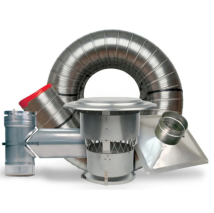
We only sell UL listed Chimney Liners and Chimney Pipes. All our flexible liners and lining systems come with our no-questions-asked limited lifetime warrantee. You can choose from single-wall stove pipes, Class A insulated chimney pipes, and chimney liners — all stocked and ready to ship the next day.

Stove pipe is used inside the room only to connect your stove to the chimney. It is not UL 103 HT rated and cannot pass through walls, ceilings, attics, or roofs. Available types:
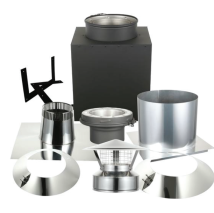
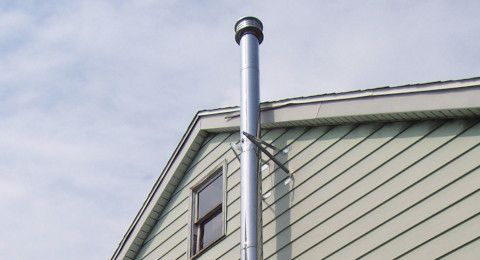
Class A chimney pipe (also called "double wall insulated chimney pipe") is used for passing through ceilings, walls, attics, and roofs. It is always UL 103 HT listed and rated to withstand chimney fire conditions up to 2100°F. It requires only 2 inches of clearance to combustibles.
Important: Stove pipe and Class A chimney pipe are not interchangeable. A tested transition support or adapter must be used between them.
All our Class A Chimney Pipes are made of stainless steel, and our Class A insulated chimney pipes are made with the highest-quality ceramic wool for the best insulation.
We ensure you get a high-performing and consistent outflow of waste gases via the chimney pipe from your home so that you are consistently safe and warm with your stove or fire.
Our products can be used both inside and outside the house and are suitable for:

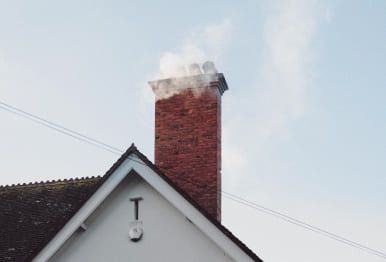
It is important that the installation guides are followed as well as relevant building and safety codes. View our guides

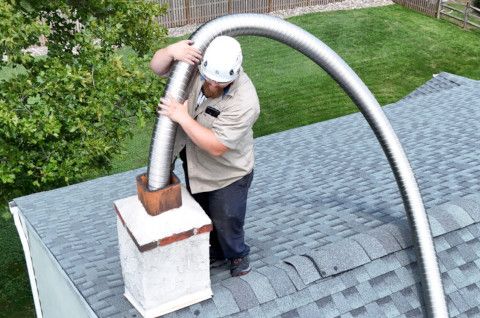
Is your chimney deteriorating and does not work as efficiently as before? Flue-Pipes.com has a cost-effective and quick solution to your problem: a stainless steel liner. Installing a chimney liner is a seamless upgrade that you can do yourself! Follow our instructions that involve standard DIY tools, and tackle the entire job yourself.
A flexible chimney liner is exactly what you need to:
But that's not all – our chimney liners also enhance the energy efficiency of your stove or burner, making fireplace maintenance a breeze.
At Flue-Pipes.com, you can purchase durable and stylish chimney parts. Transform your chimney into a timeless addition to your room’s decor – not only bringing warmth to chilly nights but also elevating the overall aesthetics.
Whether you decide on our black stove pipe, or our Class A stainless steel chimney pipe, they fit easily together and are interchangeable without any fuss.
Settling in a new place or upgrading an existing one? You will need Class A insulated stove pipes – a system that offers a safe, effective, and easy-fit heating solution.
At Flue-Pipes.com, we offer a reliable and safe Class A chimney pipes for wood burning stoves for indoor and outdoor use, passing through roofs and floors. Ideal also for gas coal-effect fires, or oil boilers, our double wall insulated chimney pipes ensure a reliable chimney, even without a brick chimney stack.
For an effortless installation, Flue-Pipes.com includes free locking bands for all Class A insulated systems and pipes.
A flue is the channel, pipe, or tube through which gases and smoke travel from the fireplace to the outside. A chimney is, on the other hand, in its simplest definition, the housing that encases the flue. There’s a misconception that masonry chimneys are simply made of brick. This isn’t true. The uneven and porous surface of brick provides a space for combustion byproducts to accumulate. This is a major fire hazard. Therefore chimneys are lined with a flue, so the smoke passes over a smooth surface that helps prevent excessive accumulation of combustion byproducts and minimizes the chance of fire. Read our full article on chimneys and chimney liners here.
An open flue typically consists of a pipe to carry combustion gases from the fireplace, while fresh air enters the fireplace via the casing. So for safe operation, additional air vents are required in the room where the appliance is installed to re-supply fresh air.
If you are installing a chimney in a newly built property and you want to use it for an open fire, wood-burning stove, or gas fire, then the chimney does need to be lined. In an older property, your chimney doesn’t have to be lined to meet building codes. An inspection by a chimney professional will tell you if you need to have it lined for safety purposes.
Chimneys operate on the principle that hot air rises above cold air. Hot exhaust gases and ash are lighter in weight than cold outdoor air. The chimney directs exhaust from these lighter gases from a fireplace upward to vent outdoors into the atmosphere. Additional air vents are required in the room where the appliance is installed to re-supply fresh air.

Call us: 888-834-0880
Email us: contact@flue-pipes.com
Office address (not for returns or pick-ups):