Quick answer: Match the liner to your appliance's flue outlet first, never to the masonry opening. Most modern wood stoves use a 6 inch round liner; a 5 inch liner suits smaller stoves whose manufacturer specifies a 5 inch flue collar. If your masonry flue is too tight for a 6 inch liner with insulation, a 5.5 inch liner is the accepted step-down. We currently ship 5, 5.5, and 6 inch kits, with 7 and 8 inch coming soon for fireplace inserts and larger appliances. The liner must run continuously from the appliance to the top of the chimney and fit inside your existing flue with room for insulation. When you are unsure, our chimney specialist will size it with you for free before you order.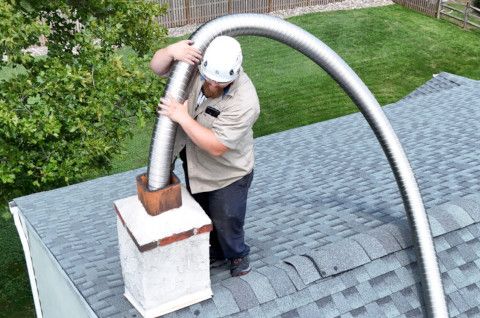
Before you size a liner, make sure a liner is the right product for your setup: see whether a liner or Class A pipe fits your home.
Sizing a stainless steel chimney liner is the single decision that makes a wood-stove install draft correctly, pass inspection, and stay safe for years. Get it right and the system pulls smoke cleanly. Get it wrong and you fight backpuffing, creosote, and a failed inspection. This guide walks you through every measurement, then points you to a complete liner kit that ships matched and ready.
Key takeaways
- Size the liner to the appliance flue outlet, not the chimney. A 6 inch stove collar needs a 6 inch liner.
- 5 inch and 6 inch are the standard wood-stove sizes; if your masonry flue is too tight for a 6 inch liner, a 5.5 inch is the accepted half-inch step-down. 7 and 8 inch kits are coming soon for fireplace inserts and larger appliances.
- Insulate the liner when the masonry flue is oversized, exterior, or your stove manufacturer requires it for the UL listing.
- A complete liner kit ships with the flexible liner, top plate, rain cap, tee or appliance connector, and clamps.
- Confirm your exact size with us before ordering, and we will design the flue for you at no cost.
Not sure which size collar your stove has, or whether your masonry flue can take an insulated liner? Call our team at 888-834-0880 or start with the matched complete chimney liner kits and we will confirm the fit before anything ships.
What size chimney liner do I need for my appliance flue outlet?
Read the size off your appliance, not your chimney. A wood stove with a 6 inch flue collar needs a 6 inch liner, and a stove with a 5 inch collar needs a 5 inch liner. Manufacturers engineer the flue outlet to match the firebox, so the outlet diameter is your starting spec and you should not reduce it. If you are connecting a fireplace insert, use the size printed in the insert's installation manual.
Measure the outside diameter of the flue collar on the stove, or simply read the model's manual. That number is the liner inside diameter you order. Our liner kit range currently ships in 5, 5.5, and 6 inch, with 7 and 8 inch kits coming soon. Six inch covers the common case, 5 inch is for stoves that specify it, and 5.5 inch is for tight masonry flues where a full 6 inch liner won't physically fit (more on that below).
Do I need a 5, 5.5, or 6 inch flue liner?
Start with what the appliance specifies: 6 inch covers most modern wood stoves, and 5 inch is correct when the stove manufacturer lists a 5 inch collar. The 5.5 inch liner is not a stove outlet size. It exists for a specific and common real-world problem: your stove calls for 6 inch, but your existing clay tile flue is too narrow to fit a 6 inch liner with insulation. A 6 inch liner with half-inch insulation wrap comes to about 7.25 inches outside diameter, which won't go down a flue tile that measures 6.75 inches inside. In that situation, a 5.5 inch liner is the accepted solution. The industry rule of thumb is never to reduce more than half an inch from the manufacturer's spec, so 5.5 inch on a 6 inch outlet is the maximum step-down. If even 5.5 inch won't fit, an ovalized liner is usually the next option rather than going smaller.
How many BTUs can a 4 inch chimney liner handle?
A 4 inch liner is a small-appliance size, not a general wood-stove size, so it is rarely the answer for a wood stove. Four inch venting appears on some gas and pellet appliances, which we do not supply. For wood stoves the practical floor is 5 inch and the workhorse is 6 inch. Always defer to your appliance manual rather than a generic BTU chart, since the manufacturer's listing is what your inspector will check.
Round versus oval, and sizing to an existing masonry flue
Order a round liner whenever your masonry flue can take it, because round flows best and insulates cleanly. Use an oval liner only when the existing clay-tile flue is too narrow for the round equivalent, which is common in older homes with rectangular flues. The rule is simple: the liner has to fit inside the smallest point of your existing flue with clearance for insulation, so measure the narrowest tile, not the opening at the top.
| Liner shape | Best for | Trade-off |
|---|---|---|
| Round | Flues with enough internal width; best draft and easiest to insulate | Needs the most internal space |
| Oval | Narrow rectangular clay-tile flues that cannot take the round equivalent | Slightly harder to insulate; confirm equivalent area |
To size to masonry, measure the inside of the narrowest flue tile in both directions, then subtract room for an insulation blanket (commonly half an inch all around). If a 6 inch round insulated liner does not fit, an oval liner of equivalent cross-sectional area is the usual answer. Our guide to choosing a flue diameter walks through the measurements in more detail.
What is the 7 times rule for chimneys?
The 7 times rule is a draft guideline, not a code, that says a chimney flue's cross-sectional area should be no more than seven times the area of the appliance flue outlet. It exists to stop a wildly oversized flue from cooling the exhaust and stalling the draft. In practice, matching the liner to the appliance outlet keeps you well inside this ratio, which is one more reason not to oversize.
Insulated versus non-insulated: when do I need insulation?
Insulate the liner when the flue is exterior, oversized, or when your appliance listing requires it, and skip insulation only on a warm interior flue that already fits snugly. Insulation keeps flue gases hot, which strengthens the draft and dramatically reduces creosote buildup. Many manufacturer and code listings also require insulation to maintain the liner's UL listing inside a masonry chimney, so check your stove's manual.
An exterior chimney on a cold wall is the classic case for an insulated liner, because an uninsulated liner there cools fast and tars up. For a deeper comparison, see our explainer on insulated versus non-insulated liners. If you are unsure whether your flue needs it, that is exactly what our free flue-design help will settle for you.
Do you even need a chimney liner?
Yes, almost always, for a wood stove vented into masonry. A correctly sized liner gives the appliance a smooth, right-sized, sealed pathway that a bare oversized masonry flue cannot. Bare flues are often too large for a modern stove, draft poorly, and let creosote and gases reach cracked mortar joints. A stainless liner fixes all three at once, which is why relining is standard practice when fitting a stove to an old chimney.
Once the size is settled, our chimney liner installation guide takes the job from the top plate down to the appliance connection, step by step.
When do I legally need a liner, and what the code says
NFPA 211 sets out how solid-fuel systems are built and cleared; the quote below is our summary of what it asks. Many local codes adopt the International Residential Code, often with amendments.
Per NFPA 211 (Standard for Chimneys, Fireplaces, Vents, and Solid Fuel-Burning Appliances), chimney installations must follow defined clearances to combustibles, minimum height above the roof penetration, and material requirements for the fuel type.
The connector pipe inside the room has its own clearance rule. For single-wall connector pipe, the rule we follow reads:
Per NFPA 211, single-wall stove pipe (the connector pipe inside the room between the appliance and the Class A chimney) must maintain at least 18 inches of clearance from any combustible wall, ceiling, or framing.
What is the 3-2-10 rule for chimneys?
The 3-2-10 rule sets how high your chimney has to terminate above the roof. Our summary of the rule:
The 3-2-10 rule (NFPA 211; IRC R1003.9 for masonry chimneys) requires that a chimney extend at least 3 feet above the highest point where it passes through the roof, and at least 2 feet higher than any portion of a building within 10 feet.
This matters for liner sizing because the liner runs the full height of the chimney and terminates at the cap, so order enough length to clear the roofline by this margin.
What ships in a complete liner kit?
A complete liner kit gives you the matched parts to reline from the appliance to the cap in one box, so you are not guessing across brands. Because we carry one curated product line, the parts in the kit are engineered to work together, which is the whole point of buying a system rather than loose components.
- Flexible stainless steel liner in your confirmed diameter (currently 5, 5.5, or 6 inch; 7 and 8 inch coming soon)
- Top plate and rain cap to seal and terminate at the crown
- Appliance connector or tee at the bottom to join the stove
- Clamps and fasteners to lock the connections
- Insulation blanket where your flue or listing calls for it
Every liner we sell is built for solid-fuel use and rated to 1000°F (538°C) continuous use, so the system is matched to the heat a wood stove actually produces. Build yours from the complete chimney liner kits and we will confirm the parts list against your install.
How much should a chimney relining cost?
Relining cost depends on the liner diameter, the chimney height, whether you add insulation, and who installs it, so the honest answer is that it scales with your specific job. Buying a complete kit keeps the parts cost predictable because everything you need ships together rather than as separate add-ons. We keep our pricing transparent for guidance, and our specialist can size the exact kit so you are not paying for length or parts you do not need. For a tailored figure, talk to our team and we will scope it against your chimney.
What wood causes the most creosote?
Unseasoned or green wood causes the most creosote, along with resinous softwoods like pine burned wet. Wet wood burns cooler and smokier, which deposits tar on the flue walls. The defenses are dry, seasoned hardwood, a hot fire, and a correctly sized, insulated liner that keeps the flue gases hot enough to exit before they condense. Sizing and insulation are doing real safety work here, not just improving draft.
Get your size confirmed before you order
You do not have to get this right alone. Call our chimney specialist at 888-834-0880 and we will confirm your liner size, then point you to the right complete kit. Prefer to start online? Build your system from the complete chimney liner kits, or get free flue-design help through our expert advice service. Every order is backed by a 14-day no-questions-asked returns policy and a limited warranty covering 100% replacement for the first 15 years, so you can order with confidence that the size is right.
Need More Information?
Visit our FAQ page, browse our installation guides, or contact our team through our advice page.